-

Managing Processing Challenges in the Community – A Guide from Therapy Point
27 April 2026 -

7 Fun and Effective Ways to Improve Handwriting Skills at Home
17 March 2025 -

How Art and Craft Support Children’s Skill Development at Therapy Point
28 April 2025 -

Unlocking the Benefits of School-Based Occupational Therapy for Your Child
25 May 2025
Blogs
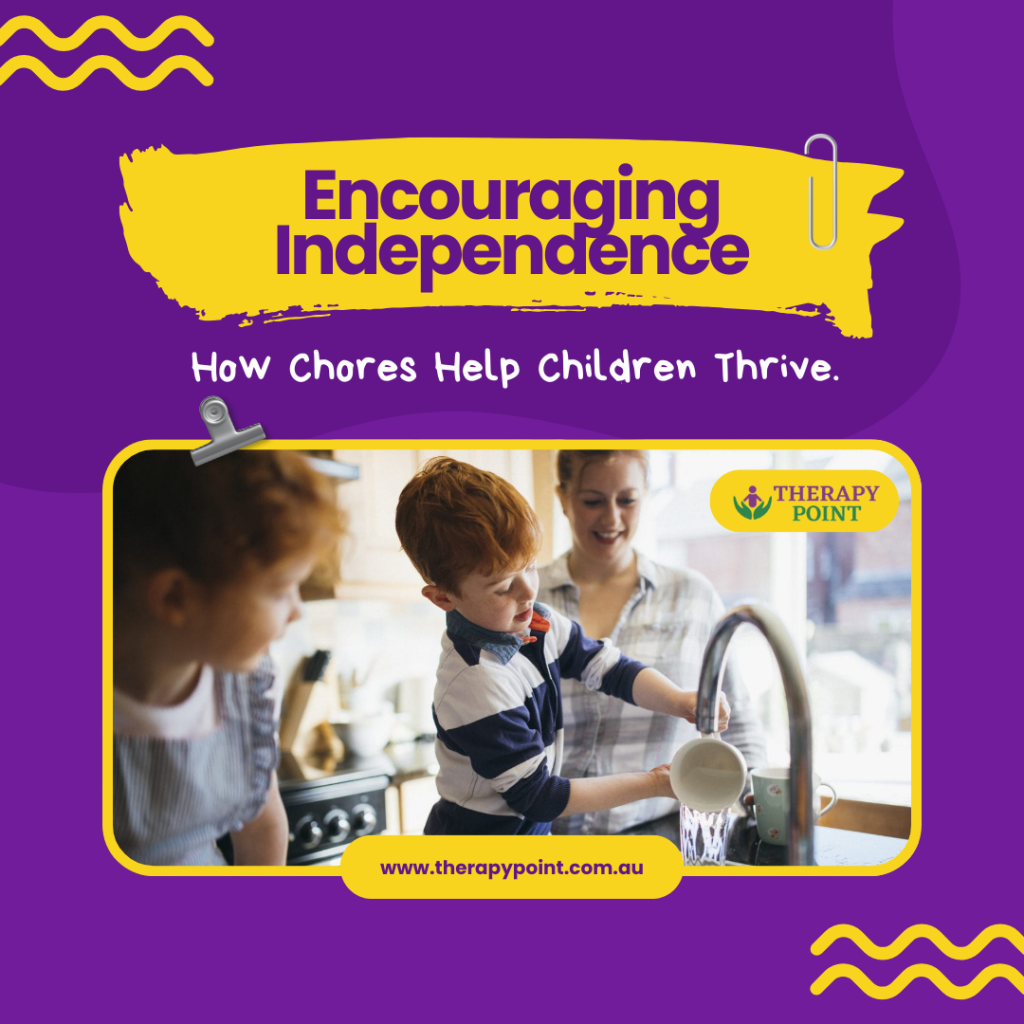
Encouraging Independence: How Chores Help Children Thrive
Nurturing Life Skills Through Everyday Tasks
Chores are more than just household responsibilities — they are valuable learning opportunities that help children develop essential life skills.
By involving children in daily tasks, parents and caregivers can encourage:
- Independence
- Accountability
- Confidence
- Problem-solving skills
- Teamwork and cooperation
Participating in chores also helps children learn time management, responsibility, and practical life skills they will carry into adulthood. These everyday activities create a strong foundation for future independence and personal growth.
Recognising and Encouraging Contributions
When children actively contribute to household tasks, they develop a sense of belonging and purpose within the family.
Recognising their efforts can help:
- Build self-esteem
- Encourage positive behaviour
- Reinforce responsibility
- Increase motivation and confidence
Some families choose reward systems such as:
- Extra screen time
- Special outings
- Sticker charts or incentives
Others may prefer:
- Verbal praise
- Positive reinforcement
- Celebrating effort and consistency
Whatever approach works best for your family, the goal is to create a supportive environment where children feel valued for their contributions.
Age-Appropriate Chores: Building Skills Over Time
Ages 3–5
Personal Tasks
- Brush teeth with assistance
- Get dressed independently
- Pick up and put away toys
- Wash hands regularly
- Place dirty laundry in the hamper
- Help pack a small bag for outings
Family Tasks
- Assist in setting the table
- Clear their plate after meals
- Feed pets with supervision
- Help carry light groceries
- Wipe down small surfaces
- Sort laundry by colour
Ages 6–7
Personal Tasks
- Choose and lay out clothing
- Make the bed
- Keep their bedroom tidy
- Fold and store clean laundry
- Prepare simple snacks
- Pack and unpack their school bag
- Shower or bathe with minimal assistance
Family Tasks
- Load and empty the dishwasher
- Set and wipe down the table
- Water indoor plants
- Sort recyclables
- Assist with food preparation under supervision
- Replace toilet paper rolls
Ages 8–9
Personal Tasks
- Prepare small meals and snacks
- Take responsibility for personal hygiene
- Manage belongings and school materials
- Keep their bedroom organised
- Change bed linens
- Wake up and get ready for school independently
Family Tasks
- Walk and feed pets
- Load and start the dishwasher
- Unpack groceries and store items
- Help prepare meals with supervision
- Take out the trash and recycling
- Assist with household cleaning tasks
- Wash the car with guidance
- Supervise younger siblings for short periods
Creating a Positive Chore Routine
To make chores a positive and productive experience, consider these simple strategies:
Start Early
Introduce chores at a young age so responsibility becomes a natural part of daily life.
Provide Clear Instructions
Break tasks into manageable steps and guide children through the process.
Use Encouragement
Focus on effort and progress rather than perfection.
Foster Independence
Allow children to take ownership of their responsibilities to build confidence and self-esteem.
Use the “When/Then” Rule
Encourage task completion with positive reinforcement, for example:
“When you’ve finished sweeping, then we can play a board game.”
Supporting Lifelong Skills
By encouraging children to participate in household responsibilities, families help develop valuable life skills that support independence, resilience, and confidence.
Chores not only help with everyday routines — they also prepare children for future responsibilities and real-world experiences.
Learn More
For more parenting tips and child development insights, follow Therapy Point on social media or contact our team for support and guidance.
0 comments